
By Ellen Thorp Published in Building Enclosure on April 25, 2025
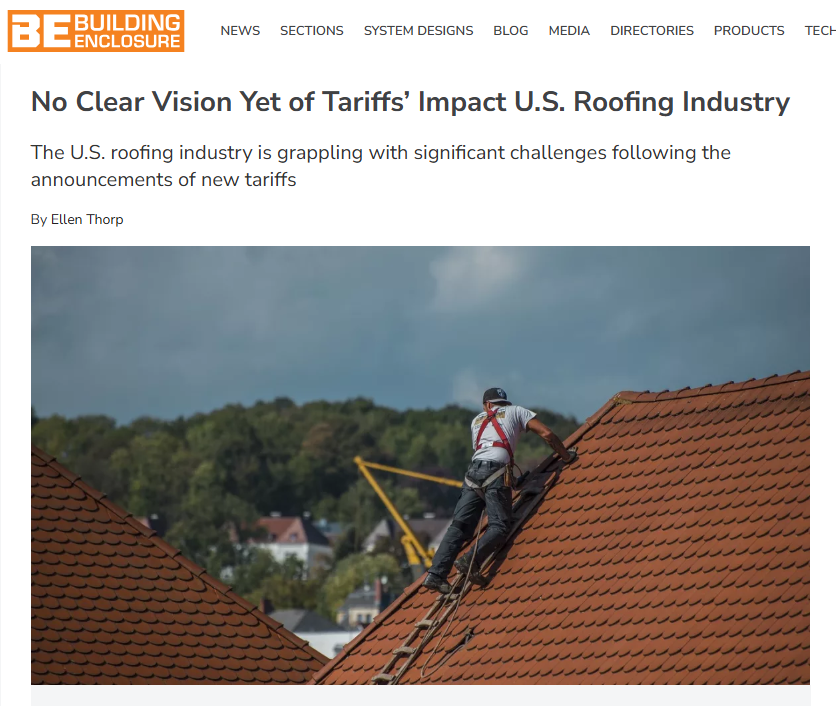
The U.S. roofing industry is grappling with significant challenges following the announcements of new tariffs. Faced with a lack of clarity regarding their scope and application, new tariffs have the potential to affect the cost and supply chain of essential materials like steel, aluminum, carbon black and various fasteners.
Contrary to popular belief, it’s not foreign exporters or overseas manufacturers who bear the cost of tariffs. The financial burden lands on domestic importers. Tariffs are only applied when goods arrive at a U.S. port of entry, at which point the importer—usually a U.S.-based manufacturer—is responsible for paying the duty directly to the federal government. That upfront cost is often passed along the supply chain, triggering a ripple effect throughout the broader economic system.
Following a flurry of tariff activity, on April 9, President Trump issued a temporary pause on escalating tariffs for nearly 60 countries, including all members of the European Union. Despite this pause, U.S. tariff rates have climbed to their highest point in nearly nine decades.
This country-specific reprieve presents a small but valuable window for businesses to assess the implications of the new import duties and strategically plan for what may lie ahead. As the reach of these tariffs expands, the ripple effects across roofing continue to emerge. In this evolving landscape we take a closer look at the most urgent challenges roofing professionals should anticipate in the wake of new tariffs.
Uncertainty is the Word of the Day
With frequent changes to targeted countries and tariff rates, manufacturers are struggling to assess the impact on their operations. Federal guidance remains unclear, leaving questions about which materials and countries are affected, and whether tariffs apply to raw materials, finished products, or both. This uncertainty is disrupting procurement strategies and complicating pricing for manufacturers, designers, and consultants across the roofing industry.
This ambiguity is a shared sentiment of all manufacturers. In its first quarter survey the National Association of Manufacturers indicated that “concerns among manufacturers run high over trade uncertainties and increasing raw material costs. In fact, trade uncertainties surged to the top of manufacturers’ challenges, cited by 76.2% of respondents—up 20 percentage points from the last quarter of 2024 and 40 points from the third quarter of 2024. Increased raw material costs were the second most cited concern, noted by 62.3% of respondents.”
Unclear Process
Traditionally, new U.S. tariffs followed a structured, transparent process. A formal proposal—either from the executive branch or through congressional legislation—is followed by a public comment period to assess economic impact. Agencies may then hold hearings for industry feedback before reviewing and adjusting the tariff list. Once finalized, the tariffs are announced with an effective date, giving businesses time to prepare.
The administration’s announcements, bypassing the usual regulatory process, have created confusion across the industry, leaving manufacturers and contractors uncertain about how to raise their concerns. This likely contributed to the strong turnout at the NRCA’s recent Roofing Day on Capitol Hill, which saw its highest attendance since before the COVID-19 pandemic.
Additionally, many roofing industry associations are advocating on various issues,including tariffs, though details on their efforts for exemptions from Section 232 steel and aluminum tariffs are scarce. During the pandemic, roofing materials were classified as essential and granted tariff exemptions. The industry must continue pushing to maintain unrestricted access to these products, as our past success in securing special considerations shows the power of effective lobbying.
Challenges in Domestic Production Unlikely
While some hope that tariffs will spur more U.S.-based manufacturing, the blanket application of the 2025 tariffs skip traditional steps, limiting opportunities for discussion on material carve-outs not available domestically. For example, roofing materials such as carbon black used in EPDM and asphalt shingles, mostly comes from China, Korea and Europe. Without an existing robust domestic supply chain for these materials, manufacturers are left with limited options to mitigate the impact of the tariffs.
The 145% tariff on Chinese imports, in particular, may bring considerable price instability to critical materials. For manufacturers that depend on consistent material costs to plan production and manage budgets, this unpredictability poses a serious challenge. The resulting volatility may also complicate efforts to secure long-term contracts with fixed pricing—especially where long-term forecasting and planning are essential.
Implementing changes in the industry takes considerable time. Setting up facilities to produce raw materials—such as polymers or carbon black, would require at least two to three years from the time funding is approved. Given the current market uncertainty, it’s unlikely that many companies will commit to these investments until the tariffs are finalized.
Reciprocal Concerns and Some Promising Signs Up North
We also have concerns about reciprocal tariffs, as they will significantly impact manufacturers across multiple fronts. While much of the attention has been on the cost increases tied to raw materials, the broader implications shouldn’t be overlooked. These tariffs could lead to reduced demand for U.S. made products abroad, making it harder for our manufacturers to compete in international markets. The combined effect of higher input costs and restricted export opportunities poses a serious threat to the industry’s growth and global competitiveness.
As announced by the Minister of Finance, the United States Remission Order (2025) came into effect on April 16, offering temporary tariff relief on U.S. goods imported by or for Canadian entities in sectors such as public health, healthcare, public safety, and national security. The Order also applies to goods essential for Canadian manufacturing, processing, or food and beverage packaging.
This measure supports businesses and organizations vital to Canadians’ well-being by easing supply chain pressures and enhancing competitiveness. The relief is valid for goods imported between April 16 and October 15, 2025, and retroactively applies to imports since March 4. Tariffs can be waived at import or refunded if already paid.
Call for Collaborative Solutions
Building products manufacturers join other industry leaders in calling on the administration to work closely with manufacturers to tackle these growing challenges. Some of the tariffs may have long-term value to the U.S. economy. A more strategic, coordinated effort could focus on pinpointing essential materials that cannot be produced domestically and finding ways to facilitate their import without excessive tariffs. Taking such steps would help bring stability to the roofing sector and maintain access to critical supplies.
The 2025 tariffs have brought uncertainty to the U.S. roofing industry and itsmanufacturers. While these tariffs may be beneficial in some cases, with unclear guidelines and limited domestic production of critical materials, both manufacturers and contractors are facing mounting challenges. To reduce the negative impact and help stabilize the industry, a more transparent and coordinated strategy—built on collaboration between the administration and industry stakeholders—is urgently needed.
KEYWORDS: aluminumeconomic analysisfastenersroofingsteeltariffs